Research Projects
Community ecology - Shifting food web dynamics under climate change
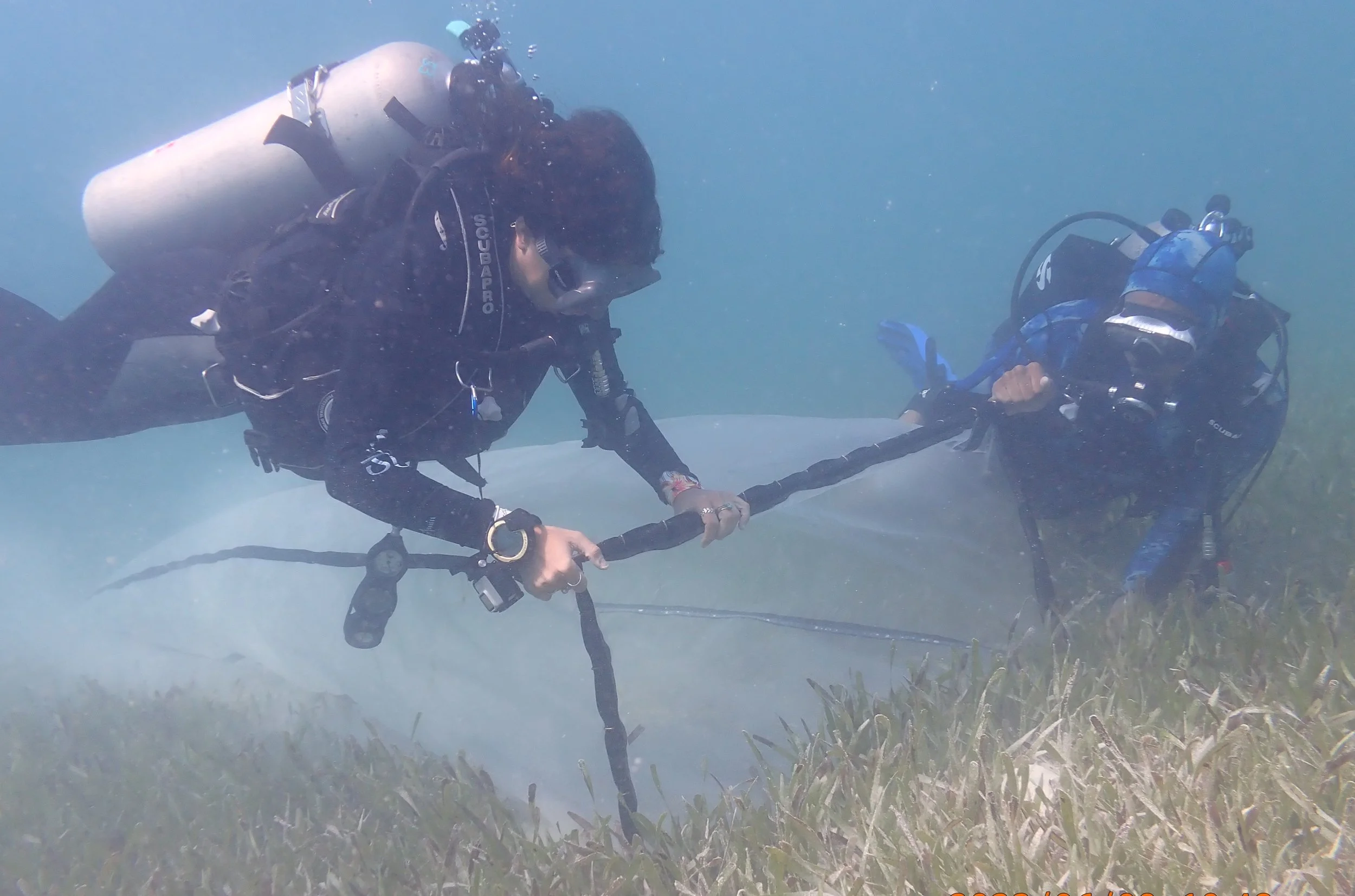
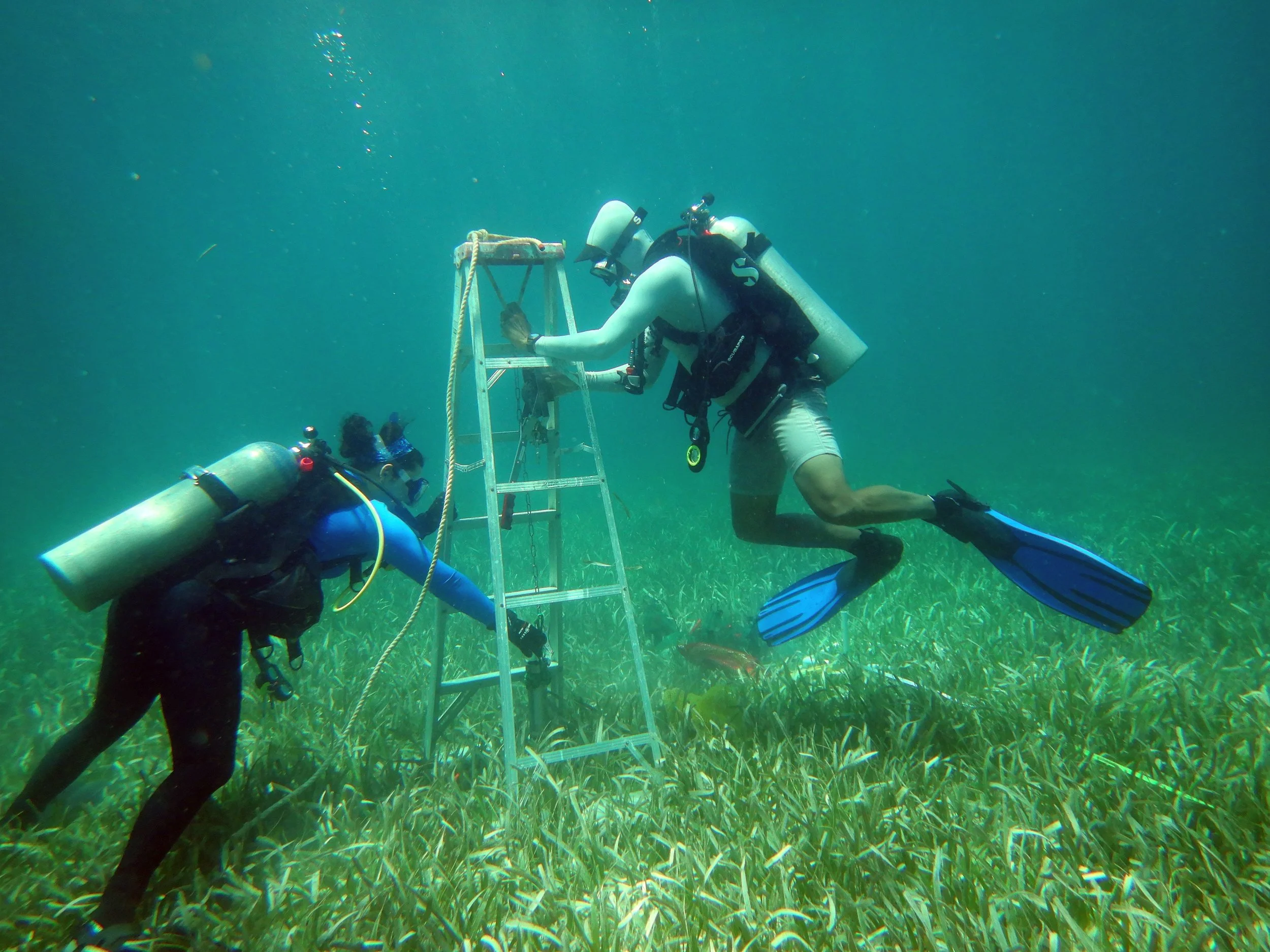
We are using large-scale, macro-ecological experiments to understand how climate-induced shifts in food web structure impact seagrass meadows across the Western Atlantic. This is a collaborative NSF-funded research project involving multiple institutions across international boundaries. Here we seek to understand how a warming climate, and the associated consequences of ‘ocean tropicalization’ influence the function of foundational seagrass habitats. Ocean tropicalization characterizes a suite of climate-driven changes in both abiotic (temperature) and biotic (poleward expansion of herbivores) forcings, and this work represents the first large scale assessment of how these factors interact across the Western Atlantic.
Using a coordinated network of synchronized field experiments over a latitudinal gradient (spanning nearly 3200 kms from Panama to Bermuda), we have been (1) assessing how various seagrass meadows respond to anticipated increases in grazing pressure with warming, (2) identifying whether these responses are uniform across the Western Atlantic, and (3) characterizing some of the key environmental parameters responsible for driving ecological resilience across latitudes. Results show that many subtropical seagrass meadows at their northern range limit are highly sensitive to grazing, and this is due to broad-scale latitudinal gradients in insolation and temperature. Thus, as the climate warms and food web dynamics shift towards stronger grazing pressure across the higher latitudes, we anticipate that many subtropical / temperate seagrass meadows may be at a heightened risk of ecological collapse.
Featured publications
Campbell, J.E. and 45 authors. 2024. Herbivore effects increase with latitude across the extent of a foundational seagrass. Nature Ecology & Evolution, 8(4):663-675.
Smulders, F.O.H., Campbell, J.E., and 44 authors. 2025. Temperature and herbivory drive seagrass recovery potential across the Western North Atlantic. Global Change Biology.
Marine conservation – Seagrass-reef connectivity and MPA design
Tropical marine ecosystems are comprised of a mosaic of habitats, and many fish species move across this complex seascape on a variety of spatial and temporal scales. For example, many reef fish species forage extensively in surrounding seagrass beds, functionally linking these habitats. A central tenet of conservation is habitat representation, partly to fulfil the habitat needs of target species that forage widely. In the Florida Keys National Marine Sanctuary (FKNMS), Sanctuary Preservation Areas (SPAs) are explicitly designed to protect fish populations, yet, they contain only a small area of seagrass. Currently managers have very little data on how much seagrass is required to support different foraging fishes. This project will collect a variety of field and laboratory data to provide clear guidance to managers on seagrass requirements for four model fish species with differing foraging modes (white grunt, yellowtail snapper, mutton snapper, and great barracuda). Project components will collect data on seascape characteristics and their potential to change because of environmental stressors, invertebrate and fish prey abundances, and risk of predation to foraging fishes at three sites (one each in the Upper, Middle, and Lower Keys). The project will also conduct novel experiments to examine food availability in different seagrass types, and fully quantify habitat quality (prey abundance and accessibility).
Ecophysiology - Species-specific responses to climate stressors
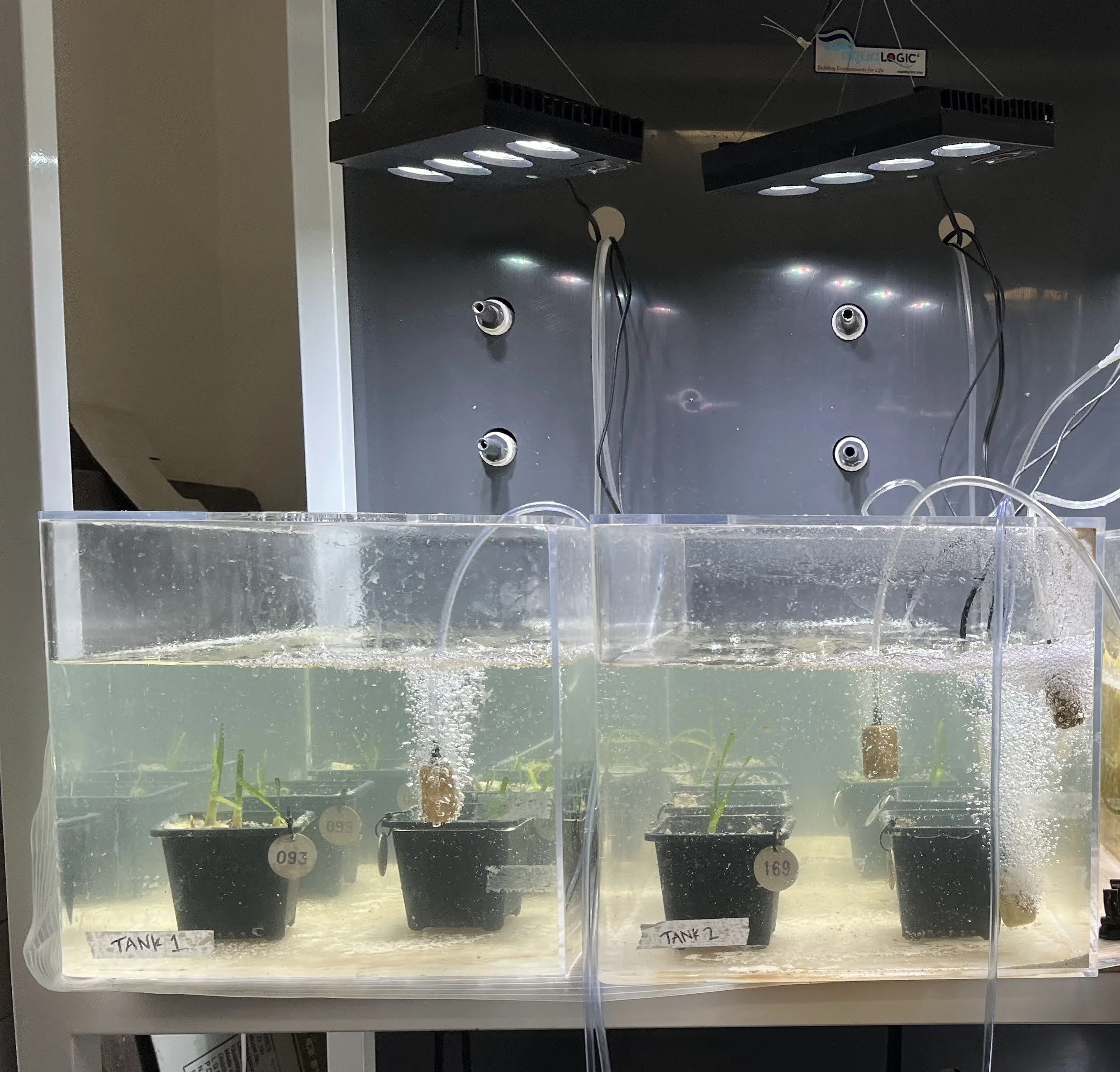
We have been studying how environmental stressors such as ocean warming and ocean acidification influence the physiology and broader functioning of a wide diversity of marine vegetation. Topics include: (1) seagrass and macroalgal response to ocean acidification across both short- and long- timescales. (2) effects of ocean warming on the survivorship and physiological functioning of marine macroalgae. (3) Synergistic interactions between ocean acidification and ocean warming on reef algal-coral interactions. This work uses laboratory and in situ mesocosms to control seawater chemistry and implements a variety of instruments (oxygen probes, PAM fluorometry) to measure organismal responses. Our most recent work has focused on how climate forcings (namely warming) impact the survivorship and physiology of holopelagic marine algae (Sargassum spp.), which has been increasing in abundance across the broader Caribbean over the past decade.
Featured publications
Hatt, D.C., Nauer, F., Collado-Vides, L., Campbell, J.E. 2025. Physiological responses of pelagic Sargassum (Phaeophyceae) to thermal stress vary by species and morphotypes. Applied Phycology
Campbell, J.E., Fisch, J., Langdon, C. and Paul, V.J., 2016. Increased temperature mitigates the effects of ocean acidification in calcified green algae (Halimeda spp.). Coral Reefs, 35, pp.357-368
Invasive species - Monitoring the spread and ecological interactions of the invasive seagrass, Halophila stipulacea
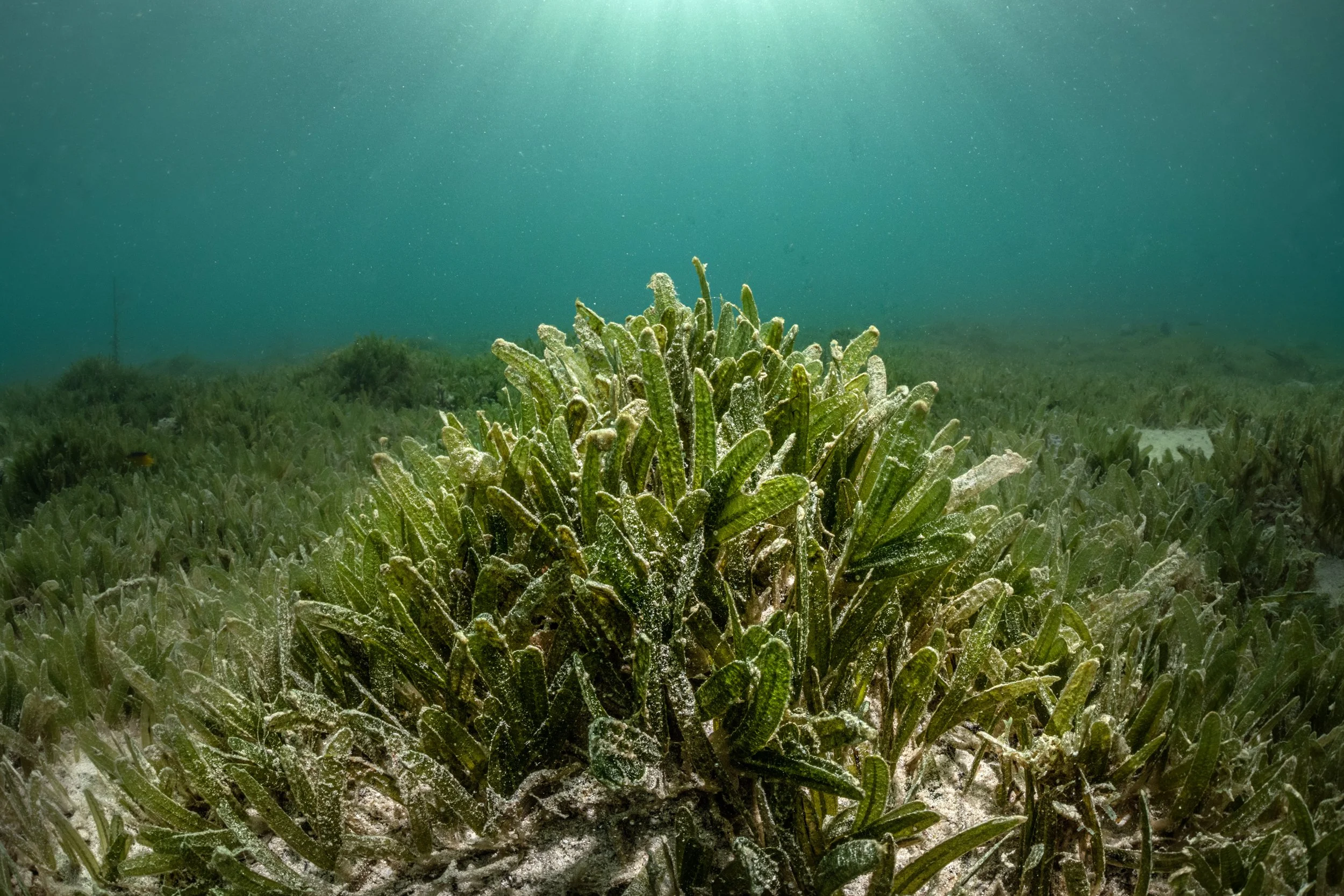
In August 2024, an invasive seagrass, Halophila stipulacea, was documented in the nearshore waters of Biscayne Bay, Florida. This species (native to the Red Sea and Western Indian Ocean) was introduced to the Eastern Caribbean near the Windward Islands in 2002, and since then, has spread northward. It currently occupies ~20 Caribbean islands, with several new sightings in Turks and Caicos and the Dominican Republic. Concurrent with the arrival of H. stipulacea, many studies report associated declines in native seagrasses and suggest that this invasive species is able to displace native seagrasses and transform the benthic seascape. While the true mechanisms driving native seagrass decline with H. stipulacea colonization are unknown, there is strong concern regarding the ultimate impact of this invasive species on overall habitat structure and ecosystem functionality. While H. stipulacea has now been reported in the continental waters of the US, the current spatial extent of this new arrival is unknown. Furthermore, there is very little information regarding its rate of spread and interaction / encroachment on native seagrasses. This information is urgently needed to inform any potential management action.
We will be using a multi-scale approach to understand (1) the current spatial extent of H. stipulacea in Biscayne Bay and (2) potential interactions with native species. Baywide synoptic surveys will be coupled to repeated drone flight to develop a spatiotemporal understanding of invasive species distribution, patch spread and interactions with native species. We are also conducting small-scale measurements of rhizome extension and reproductive phrenology, coupled with environmental monitoring to better understand the autecology of this species.
Featured publications
Campbell, J.E., Patranella, A., Hatchell, B.A., Furman, B.A., Wheeler, M.E. 2025. Staminate flowers of the non-native seagrass, Halophila stipulacea, observed for the first time in Biscayne Bay, Florida, USA. Botanica marina
Campbell, J.E., Allen, A.C., Sattelberger, D.C. White, M.D., Fourqurean, J. 2024. First record of the seagrass Halophila stipulacea (Forsskal) Ascherson in the waters of the continental United States (Key Biscayne, Florida). Aquatic Botany, 196, 103820.
Ecosystem ecology - Evaluating the variability and drivers of coastal blue carbon stocks
Coastal ecosystems serve as substantial reservoirs of organic carbon. Salt marshes, mangroves and seagrasses have all been recognized as valuable habitats that store and sequester atmospheric carbon, which serves to partially mitigate the worst effects of climate change. While our awareness and appreciation of coastal blue carbon has been increasing, we still have a poor understanding of (1) spatial variability in coastal carbon stocks , (2) what are the environmental drivers of coastal blue carbon, and (3) how carbon stacks fare under altered environmental conditions.
We have been using environmental surveys combined with manipulative field and lab experiments to improve our understanding of how coastal carbon stocks vary and how they might be influenced by global change stressors.
Our work has primarily been across the Caribbean in collaboration with the Caribbean Carbon Accounting in Seagrass project, along with other regional networks and local projects.
Featured publications
Fourqurean, J.W., Campbell and 41 authors. 2023. Seagrass abundance predicts surficial soil organic carbon stocks across the range of Thalassia testudinum in the Western North Atlantic. Estuaries and Coasts. 46, 1280-1301.
Campbell, J.E., Lacey, E.A., Decker, R.A., Crooks, S. and Fourqurean, J.W., 2015. Carbon storage in seagrass beds of Abu Dhabi, United Arab Emirates. Estuaries and Coasts, 38, pp.242-251.
Restoration ecology - Understanding how genetic diversity of tropical seagrasses contributes to restoration success
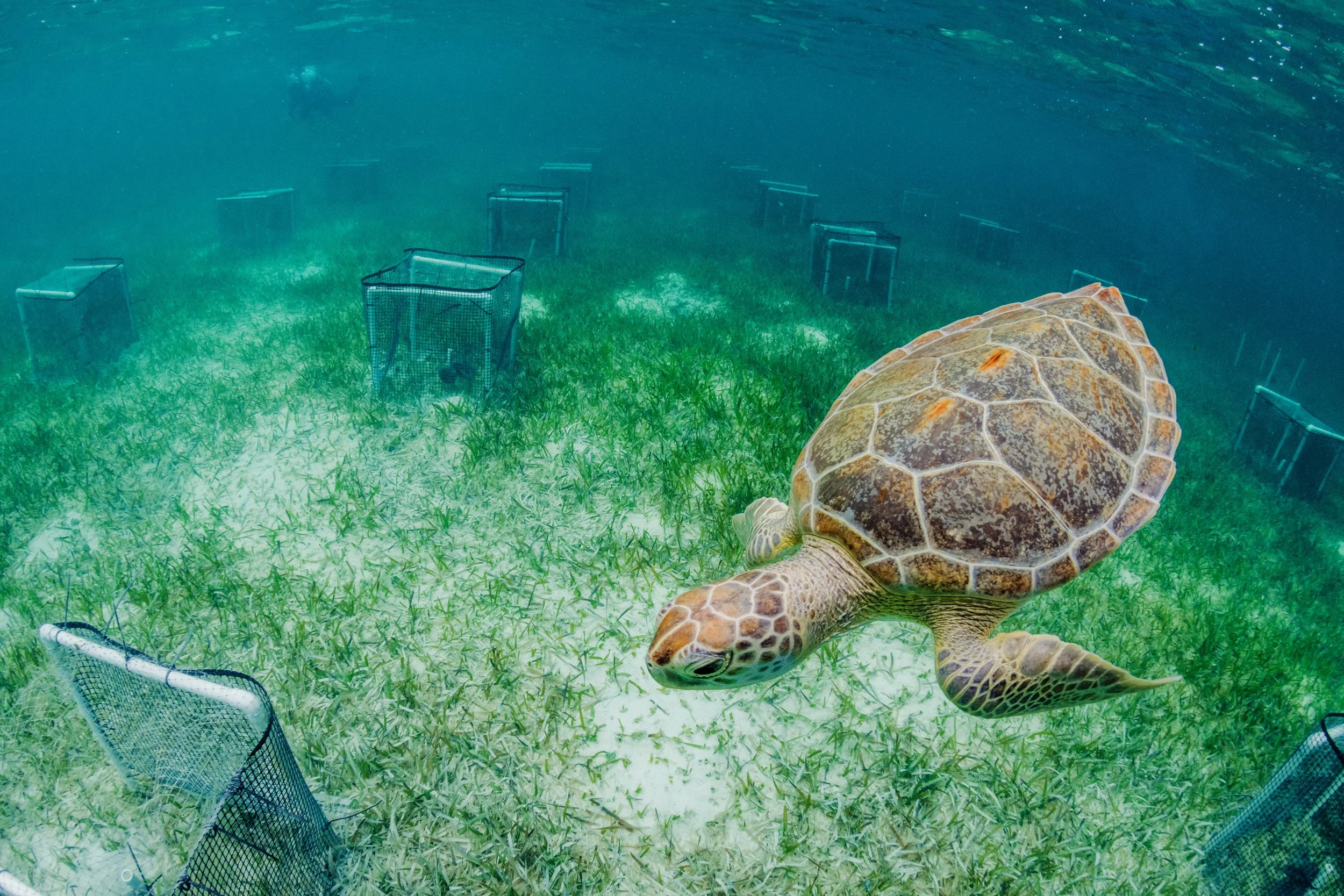
In Florida seagrass ecosystems, extreme die-off events have brought into focus the need for regional conservation efforts. Seagrasses are under threat from multiple anthropogenic stressors, due to climate change and poor water quality. Such factors have contributed to large-scale die-offs of valuable seagrass beds, such as in Florida Bay and the Indian River Lagoon. These events are only expected to become more frequent as ocean warming trends continue, thus, there is an urgent need to better understand seagrass tolerance to multiple stressors, both to predict future resilience by identifying vulnerable populations and to incorporate resilience to current and future stressors into restoration planning and techniques.
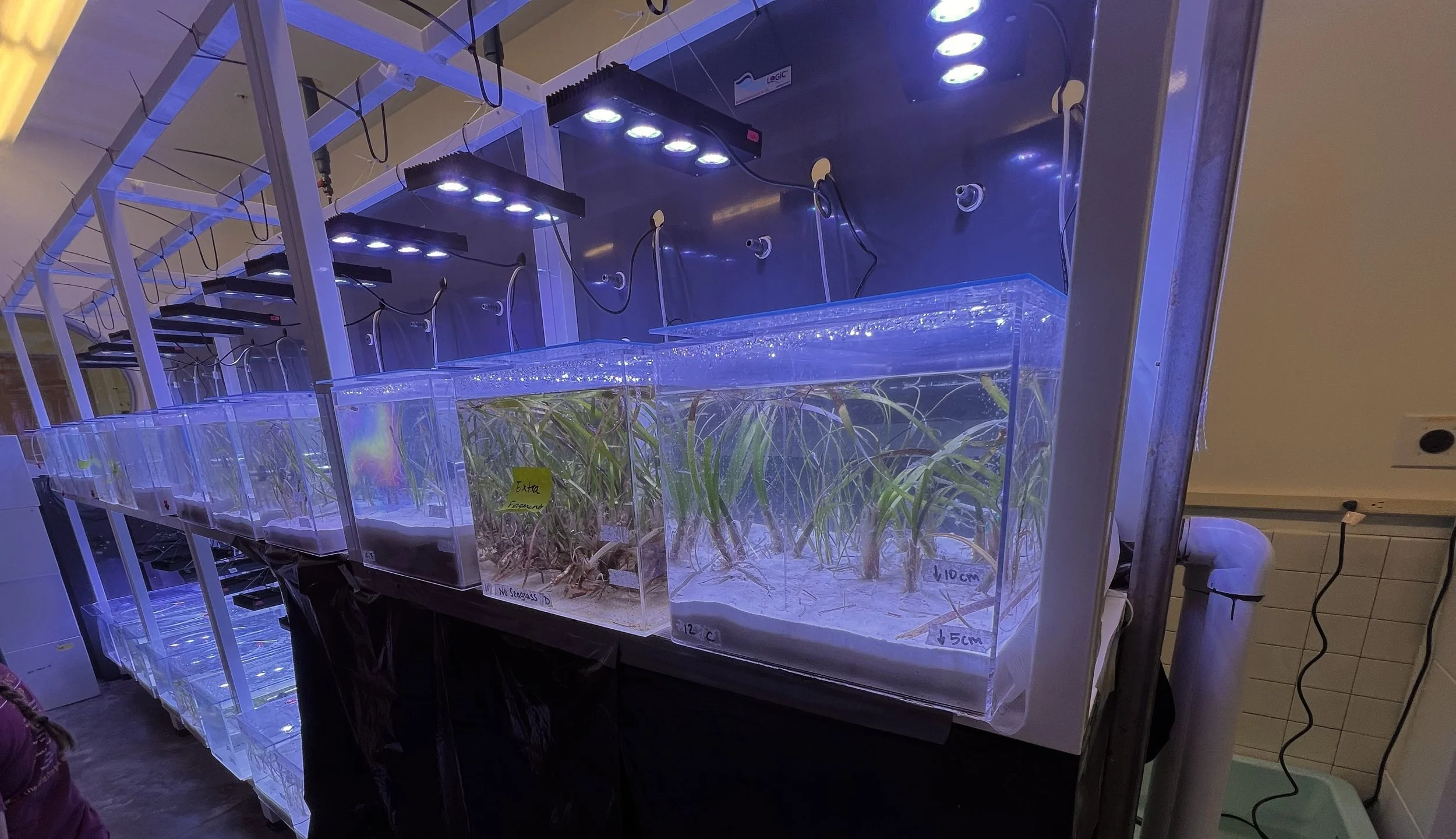
This project tests the tolerance of various statewide seagrass subpopulations to multiple environmental stressors in a controlled setting, to identify potential stocks for nursery cultivation and future restoration efforts. Genetic variation across metapopulations is important for climate resilience since the response the response of different subpopulations to increasing stressors will depend on adaptation to local regimes. Currently we lack data on geographic variation in seagrass stress tolerance.
This project will examine resilience in terms of stress tolerance of seagrass subpopulations, including ecological responses relevant to restoration success (e.g. growth, survival), photosynthetic health and cellular proteomic stress responses. The work will provide key insight into the mechanisms controlling the process of seagrass stress tolerance and will be able to uncover a suite of proteins that could serve as a “fingerprint” for this stress tolerance. Restoration professional will be able to connect geographic/genetic variation with variation in cellular and ecological responses in controlled settings and in the field, select source populations for seedling collection and cultivation to create nursery stocks for restoration.